
In integrative psychiatry, we often focus on a patient’s gut health. Scientifically, this connection is called the gut–brain axis, which is the constant two-way communication between your gut and your brain. Research on the microbiome shows that the bacteria living in your intestines influence mood, stress, and mental performance. Michael Gershon’s groundbreaking book The Second Brain revealed the importance of the nervous system of the gut, also called the enteric nervous system, a vast network of neurons in the gut that interacts with the brain and immune system. Understanding the gut–brain axis is transforming how integrative psychiatry approaches anxiety, depression, mood disorders, and stress resilience.
The Enteric Nervous System: The “Second Brain”
The enteric nervous system contains more neurons than the spinal cord and can mediate reflexes without the involvement of the central nervous system (CNS). It also produces neurotransmitters like serotonin, dopamine, glutamate, noradrenalin, and GABA (gaba-aminobutyric acid). For example, over 95% of the body’s serotonin and 50% of the body’s dopamine originates in the gut (Hamamah, et al., 2022). This is why as many as 40% of patients who see a gastroenterologist present with symptoms that have no clear anatomical or chemical cause, a set of conditions known as Disorders of Gut-Brain Interaction (DGBIs). In integrative psychiatry, this matters because changes in the gut–brain axis—from poor diet, chronic stress, or antibiotics—can alter neurotransmitter signaling and, therefore, mood, resulting in a variety of disorders such as depression, anxiety, autism, and ADHD. Gershon called the gut our “second brain” for good reason: it not only regulates digestion but also controls our mood by connecting the CNS with the microbiome.
How the Microbiome Talks to the Brain
Your microbiome—the trillions of bacteria, fungi, and viruses in your intestines—affects the gut–brain axis through:
- Neural pathways: The vagus nerve is the main mediator for communication between the gut and the brain (Cryan and Dinan, 2012).
- Immune signaling (cytokines and inflammation): Microorganisms in the gut affect the immune system, which in turn activates its cells to release inflammatory cytokines. It’s important to know that cytokines can cross the blood-brain-barrier (BBB), thus affecting the brain and altering mood (Foster and Neufeld, 2013).
- Hormonal pathways (stress hormones, gut peptides): There is an intimate connection between the gut–brain axis and the hypothalamic–pituitary–adrenal (HPA) axis. The HPA axis is the regulatory center of the physiological stress response (Grenham, S., et al., 2011).
- Microbial metabolites (short-chain fatty acids, tryptophan derivatives): Bacteria in our gut synthesize important chemicals, such as the short-chain fatty acid butyrate (which affects neurotransmitters and, therefore, mood) and tryptophan (an amino acid that is a precursor to serotonin) (O’Mahony et al., 2014).
- Animal and human studies show that a disrupted microbiome (dysbiosis) is linked to depression, anxiety, and cognitive changes. In integrative psychiatry, clinicians see the gut–brain axis as a modifiable factor—an area where lifestyle, nutrition, and targeted supplements can complement medication and therapy (Butler et al., 2019).
Stress, the Microbiome, and Mental Health
Chronic stress changes the microbiome and weakens the gut barrier, fueling inflammation that feeds back to the brain. In humans, early life stress, poor diet, or repeated antibiotics can disrupt the gut–brain axis and increase vulnerability to anxiety or depression (Foster and Neufeld, 2013). This is why integrative psychiatry emphasizes stress management, nutrition, and sleep alongside standard treatments.
Diet and Lifestyle: Building a Healthier Gut–Brain Axis
Key habits to support the microbiome and the gut–brain axis:
- Fiber-rich, plant-based foods act as prebiotics, feeding beneficial bacteria and producing anti-inflammatory metabolites. Examples include bananas, raw garlic, raw onion, raw leeks, asparagus, apples, oats, barley, and flaxseeds (Holscher, 2017).
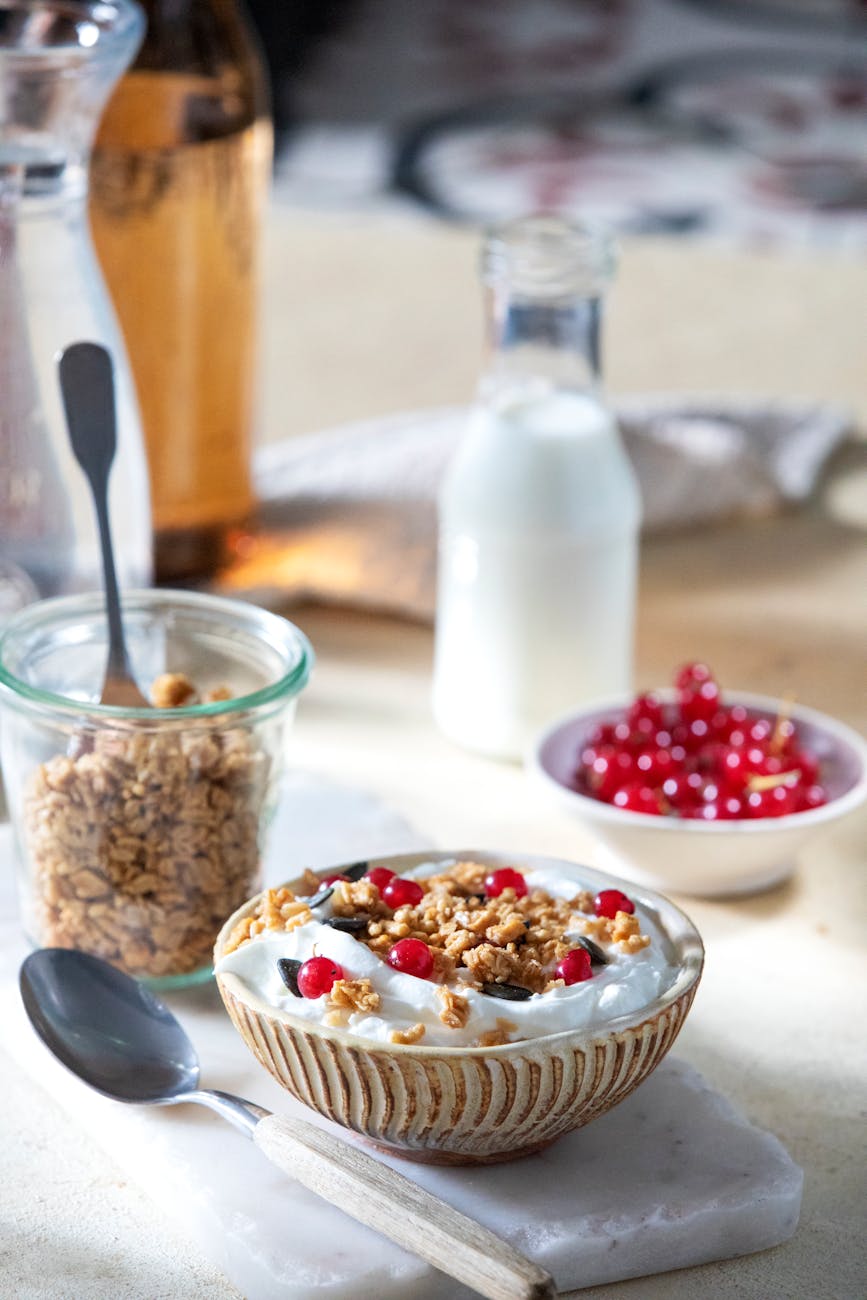
- Fermented food acts as a source of probiotics, introducing live microbes. Examples include kimchi, sauerkraut, yogurt, kefir, miso, tempeh, kombucha, fermented cheese (Gouda, cheddar, Swiss), and sourdough bread (Marco et al., 2021).
- Healthy fats and balanced protein support cell membranes and reduce inflammation (Costantini, et al., 2017).
- Stress management—including breathwork, yoga, and meditation—stabilizes both the enteric nervous system and the microbiome.
- Sleep and exercise regulate hormones and microbial diversity (Madison & Kiecolt-Glaser, 2019).
In integrative psychiatry, these strategies are core—not just add-ons.
Probiotics, Testing, and Integrative Psychiatry
Sometimes, diet and lifestyle changes aren’t enough. Certain probiotics—sometimes called psychobiotics—show promise for improving mood or stress resilience (Dinan & Cryan, 2017). In integrative psychiatry, stool or microbiome testing may be considered when symptoms persist, but these tests are used as tools rather than stand-alone answers. Lab work to check for inflammation, nutrient status, or hormones can also guide interventions aimed at the gut–brain axis.
The Bottom Line
Your gut is not just a digestive organ; it’s a key player in mental health. The microbiome, the enteric nervous system, and the gut–brain axis form an interconnected system that shapes mood, cognition, and stress response. Integrative psychiatry uses this science to move beyond symptom management and create whole-person care plans—combining medication, therapy, nutrition, stress reduction, and targeted supplements to support both the gut and the brain.
References
Butler, M. I., Morkl, S., Sandhu, K. V., Cryan, J. F., & Dinan, T. G. (2019). The gut microbiome and mental health: What should we tell our patients? Canadian Journal of Psychiatry. 64(11): 747-760. doi: 10.1177/0706743719874168
Cryan, J. F., & Dinan, T. G. (2012). Mind-altering microorganisms: The impact of the gut microbiota on brain and behavior. Nature Reviews. 13(10): 701-712. DOI: 10.1038/nrn3346
Dinan, T. G., & Cryan, J. F. (2017). The microbiome-gut-brain axis in health and disease. Gastroenterology Clinics of North America. 46(1):77-89. doi: 10.1016/j.gtc.2016.09.007
Fikree, A., Byrne, P. (2021). Management of functional gastrointestinal disorders. Clin Med (Lond). 21(1): 44-52. doi: 10.7861/clinmed.2020-0980
Foster, J. A., & McVey Neufeld, L. (2013). Gut-brain axis: how the microbiome influences anxiety and depression. Trends in Neurosciences, 36(5): 305-312. DOI: 10.1016/j.tins.2013.01.005
Foster, J.A., Rinaman, L., & Cryan, J.F. (2017). Stress and the gut–brain axis: Regulation by the microbiome. Neurobiology of Stress, 7, 124–136.
Gershon, M.D. (1998). The Second Brain: A Groundbreaking New Understanding of Nervous Disorders of the Stomach and Intestine. HarperCollins.
Grenham, S., Clarke, G., Cryan, J. F., Dinan, T. G. (2011). Brain-gut-microbiome communication in health and disease. Frontiers in Physiology. 2. https://doi.org/10.3389/fphys.2011.00094
Hamamah, S., Aghazarian, A., Nazaryan, A., Hajnal, A., Covasa, M. (2022). Role of microbiota-gut-brain axis in regulating dopaminergic signaling. Biomedicines, 10(2): 436. doi: 10.3390/biomedicines10020436
Holscher, H. D. (2017). Dietarty fiber and prebiotics and the gastrointestinal microbiota. Gut Microbes. 8(2):172-184. doi: 10.1080/19490976.2017.1290756
Loh, J.S., Mak, W.Q., Tan, L.K.S., et al. (2024). Microbiota–gut–brain axis and its therapeutic applications in neurodegenerative diseases. Signal Transduction and Targeted Therapy, 9(37). DOI: 10.1038/s41392-024-01743-1
Madison, A., Kiecolt-Glaser, J. K. (2019). Stress, depression, diet, and the gut microbiota: human-bacteria interactions at the core of psychoneuroimmunology and nutrition. Current Opinion in Behavioral Sciences. 28:105-110. doi: 10.1016/j.cobeha.2019.01.011
Marco, M. L., Sanders, M. E., Ganzle, M., Arrieta, M. C., Cotter, P. D., De Vuyst, L., Hill, C., Holzapfel, W., Lebeer, S., Merenstein, D., Reid, G., Wolfe, B. E., & Hutkins, R. (2021). The International Scientific Association for Probiotics and Prebiotics (ISAPP) consensus statement on fermented foods. Nature reviews. Gastroenterology & Hepatology. 18(3): 196-208. doi: 10.1038/s41575-020-00390-5
O’Mahony, S. M., Clarke, G., Borre, Y. E., Dinan, T. G., & Cryan, J. F. (2014). Serotonin, tryptophan metabolism and the brain-gut-microbiome axis. Behavioral Brain Research. 277:32-48. doi: 10.1016/j.bbr.2014.07.027
 Wholistic Psychiatry, PLLC, Mira Pistillo, PMHNP
Leave a comment